Table Of Content
Designers are also faced with tedious day-to-day tasks such as product localization and creating the same graphics in multiple languages. Netflix is already using augmented intelligence systems to translate artwork personalization and localization of show banners into multiple languages. The system “reads” the master version, and the personalized and localized graphics are rapidly produced. All a designer has to do is check the graphics, approve or reject, and if necessary manually adjust them—a massive time-saver.
AI in design collaboration among designers
Using artificial intelligence in design ensures that repetitive and menial labour can be taken care of, freeing up designers' time which they can use on the actual creative work. AI's automation capabilities allow more creativity and experimentation as designers have more time to conceptualise and refine their designs. Moreover, designers can automate repetitive design tasks with AI-powered tools like Adobe's Sensei. It can take hours and be tedious, especially when you want everything accurate. With Adobe's Sensei, a designer can create variations of the same design with minor changes, saving lots of time and increasing productivity. AI has enabled designers to analyse the intricate patterns in customer engagement, helping businesses across multiple sectors, including retail, healthcare, and finance.
AI Revolutionizes Home Design With Instant, Innovative Solutions - PYMNTS.com
AI Revolutionizes Home Design With Instant, Innovative Solutions.
Posted: Fri, 22 Mar 2024 07:00:00 GMT [source]
End-to-End Solutions
For instance, furniture design involves various factors such as size, shape, and material that must be considered to meet functional requirements while ensuring customer satisfaction. With AI, advanced analytics can analyse design specifications and past designs to find gaps and improve future designs. This enables the creation of functional, aesthetic designs that meet the requirements of both end-users and creators. To take a step back, the creative business isn’t the only one affected by AI.
AiHouse allows anyone to be an interior designer
Dorik Review: The Best AI Website Builder Using a Prompt? - Unite.AI
Dorik Review: The Best AI Website Builder Using a Prompt?.
Posted: Fri, 26 Apr 2024 15:11:18 GMT [source]
And it’s much more advanced than any other AI art generation tool available right now. They will also become more tuned towards enabling personalization at scale. This might even start to upend the long-held expectations of uniformity and the cookie-cutter approach that we have of mass-produced goods and products. It’s obvious to me that generative AI has a lot of potential to augment abilities and streamline working processes in design. So, here’s a peek at how generative AI is changing the face of design, covering what we’ve seen so far and some ideas about how it will evolve in the future. You've heard of AI and all the wonderful—and sometimes scary—possibilities.
Design systems
Seventy-four percent of customers feel frustrated when a website’s content isn’t customized, according to stats cited by Porch Group Media. Companies that do personalize report not only increased revenue, but more efficient marketing spend. Today, Webflow announced that it acquired Intellimize, a startup leveraging AI to personalize websites for unique visitors.
For example, I crack up every time I watch my younger son exploring the subtleties of a twisty straw (far left) or trying to juke my kisses (middle). And I well up with pride when I watch my older son on his bike at the park (far right), because I remember that day as a turning point in his self-confidence to ride on his own. I think that part “mobile app UI design, hotel booking, Dribbble, Behance” is self-explanatory.
However, despite the incredible abilities of AI-powered systems, they can only go so far. While AI can assist designers in solving complex problems, it lacks human designers' creativity, imagination, and vision. Human input is vital in the creative process as it adds a personal touch, using experience to move beyond data, create unique, expressive designs, and communicate effectively. Personalisation in design is undoubtedly changing how businesses interact with their customers.
How we design: From pixels to patterns
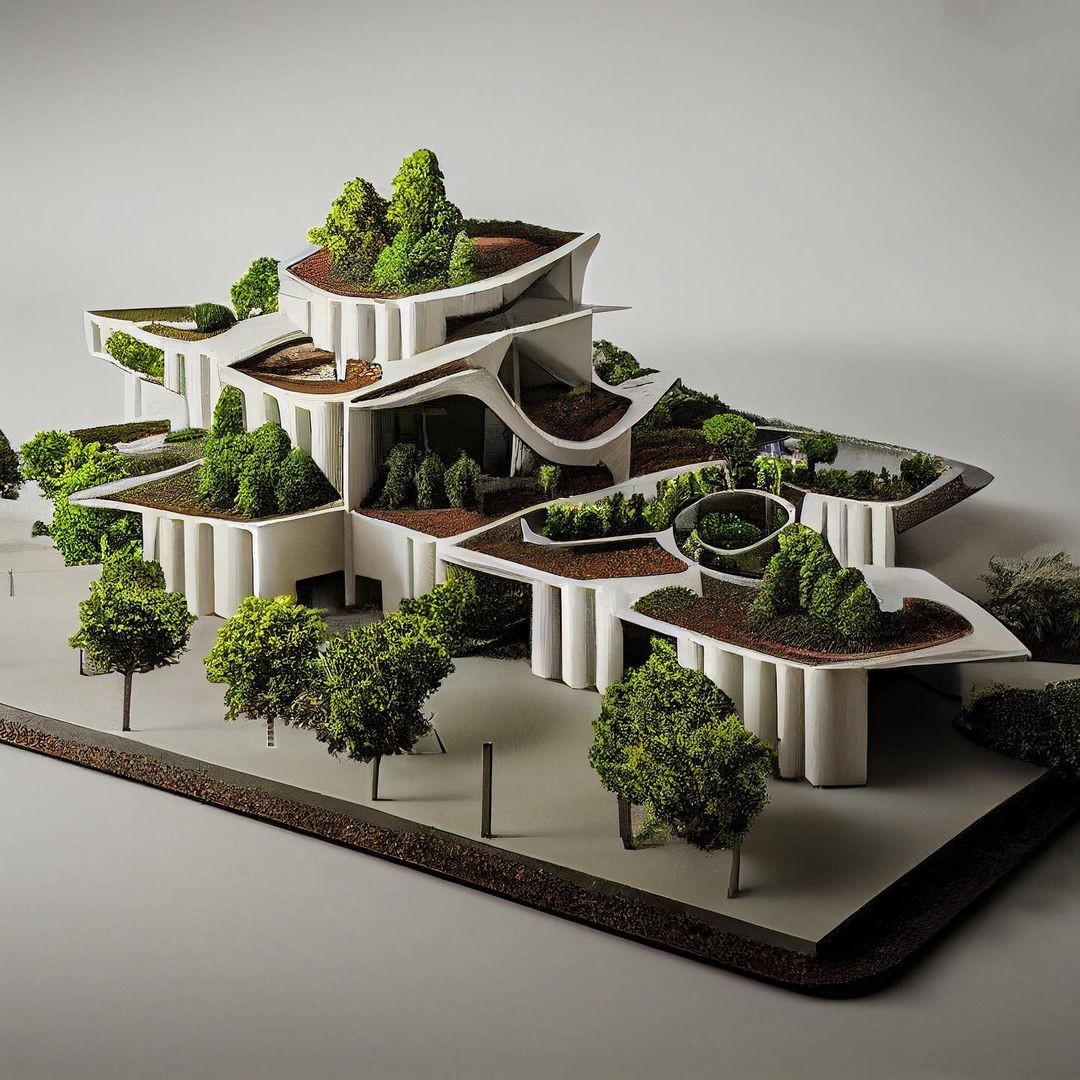
"AI generates images based on the designer's idea that is fed in the form of text, and that idea will change from one user to another." When working with the tools, designers often create hundreds or thousands of images that they then need to sort through and edit manually. Three years ago, Jordan tweeted a short video of a plugin he built on Figma that leveraged GPT-3 to generate design ideas with a simple prompt. Two years later, he founded Diagram, which has been recognized as one of the most promising startups building at the intersection of design and AI. Permits storing data to personalize content and ads across Google services based on user behavior, enhancing overall user experience.
Website pages can be created by designers by just submitting an image of the design. Fronty will instantly generate the front-end code (HTML / CSS) once the design has been loaded. Additionally, Fronty’s UI editor allows designers to quickly change the website’s content and appearance online.
Throughout the course, you'll receive practical tips for real-life projects. In the Build Your Portfolio exercises, you’ll practise how to integrate AI tools into your workflow and design for AI products, enabling you to create a compelling portfolio case study to attract potential employers or collaborators. In lesson 3, you’ll discover how to incorporate AI tools for prototyping, wireframing, visual design, and UX writing into your design process. You’ll learn how AI can assist to evaluate your designs and automate tasks, and ensure your product is launch-ready. The rapid growth of machine learning and AI techniques has augmented engineers’ ability to model complex phenomena. We study physics-based machine learning using multi-modal data from simulations, experiments, on-line sensors, and expert knowledge for rapid predictive modeling, uncertainty quantification, and design.
It allows designers to work more efficiently, creatively, and productively, enhancing the personalisation of designs. As designers, we should embrace AI's possibilities while emphasising the critical role of human creativity and intuition in design. The future of AI in design is limitless, and the opportunities for innovation and creativity are endless. Moreover, artificial intelligence in design also allows businesses to boost their brand value, offering better customer experiences and personalised services. By analysing vast sets of customer data, AI-powered systems can generate personalised designs and optimise user experiences.
Because modern AI tools don’t give you much freedom to impact the design direction, the final result misses the human touch. Right now, you cannot convey a lot of personality in works generated by AI tools. We will likely see the tools that give designers more control over the process of creating visual assets. Advancements in technology and software are enabling designers to create stunning 3D visuals that add depth and realism to their designs. However, there are challenges and ethical considerations to be mindful of.
It handles the little details so the designer can concentrate on ideas and creativity. For instance, an AI assistant will aid you in gathering information or locating pertinent references. Scientific American is part of Springer Nature, which owns or has commercial relations with thousands of scientific publications (many of them can be found at /us). Scientific American maintains a strict policy of editorial independence in reporting developments in science to our readers. Classical transformers, at the scales they are now being used, consume so much energy that U.S. utilities are keeping carbon-spewing coal plants operational just to meet new data centers’ power demands. The dream of a quantum transformer is also the dream of a leaner, more efficient machine that lightens the energy load.
UX design pioneer Don Norman warns that these programs are not truly intelligent yet. Instead, they make decisions based on patterns in data too large for humans to process. On the other end of the spectrum is General AI, an advanced form capable of comprehending, learning, and applying knowledge across various tasks—mimicking the breadth of human intelligence. Unlike narrow AI, AGI can reason, problem-solve, adapt, and exhibit self-awareness. The ultimate goal of AGI is to perform any intellectual task that humans can, seamlessly transfer knowledge between domains, and autonomously improve over time.
With its sophisticated algorithms, Debuild can generate React components and SQL code and help assemble an interface visually, allowing designers to create high-quality web apps in seconds. However, designers must be cautious to avoid over-relying on AI in the design process. AI-powered systems should complement the designers, not replace them entirely, as original designs and human creativity are still essential in the design process. Over-reliance on AI devalues the human component, which adds nuance and emotions, making designs unique and conveying messages that resonate with consumers. Therefore, designers should leverage AI to expand their creativity, enhance problem-solving abilities, and improve methods. Another AI-based design tool called Fronty makes the jobs of front-end designers and developers easier by converting an image into HTML and CSS.


No comments:
Post a Comment